



"...the people doing the work should own the tools"
The idea isn't new; and while just saying it out loud now and then, is a lovely way to scare a few angry old conservatives - we had the privilege to chat to some people who actually live and work by this ideal.


Couriers, cooperatives, and a federation: CoopCycle
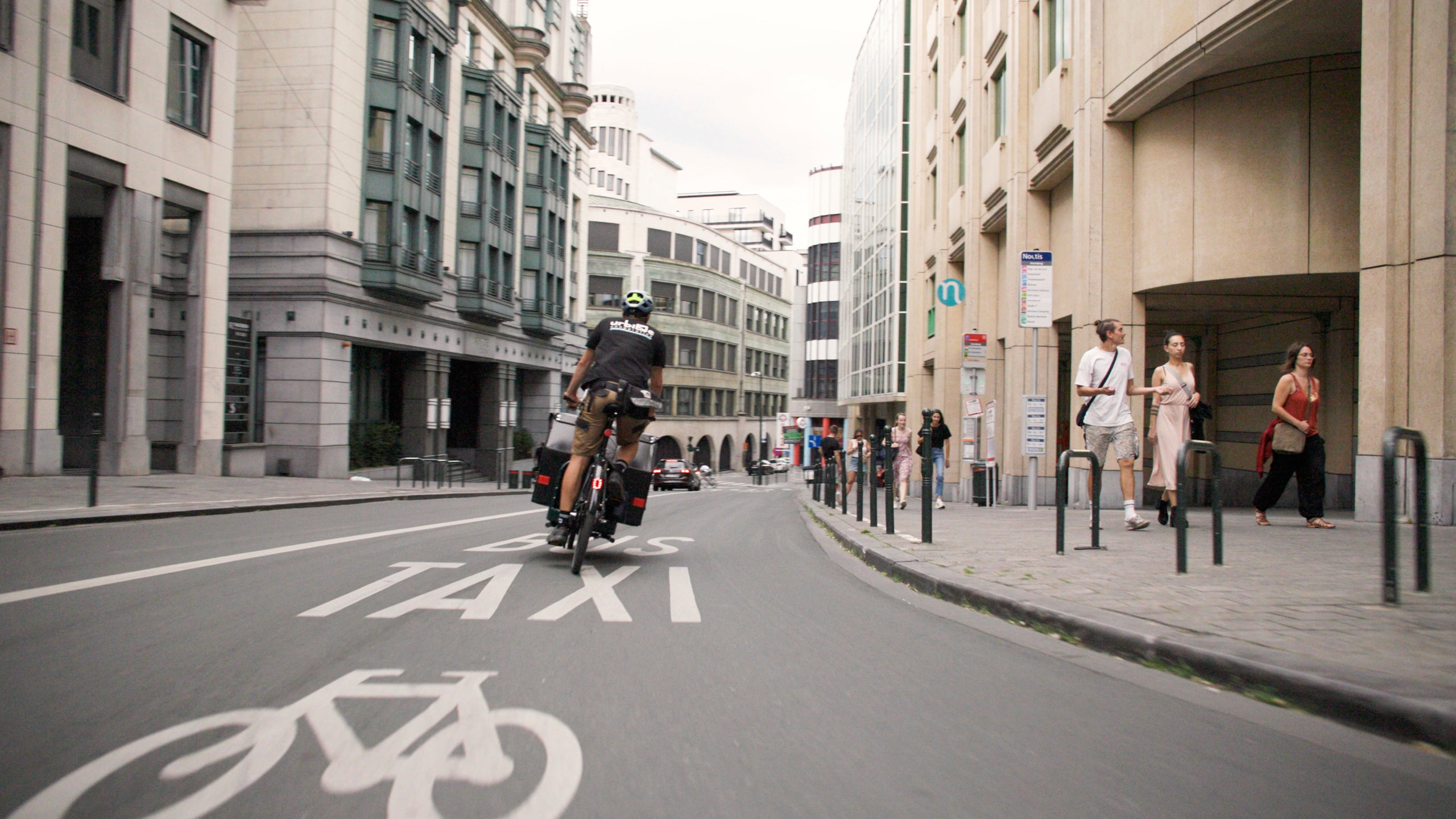
Behind every delivery app there’s a courier, and in most cases that courier is classed as an independent contractor, taking on the risk while an algorithm sets the pace and the big platforms profit.
CoopCycle is an international federation of bike delivery cooperatives, and was founded in 2017 on the simple aforementioned counter-proposal: that the people doing the work should own the tools and be governed democratically.
Today, that idea has grown into a federation of 66 member organisations (as of early 2026). They range from big-city operations to small local ones. The network stretches through Europe into Canada, South America and Africa. What unites them is democratic governance, a commitment to fair working conditions, and a firm rejection of predatory platform models.
CoopCycle exists to translate ideals into practice: To unite, pool software, knowledge, and governance across a growing network, and to move the needle on questions that no single cooperative can tackle alone.
"That means engaging in institutional conversations about labour regulation and urban logistics policy, raising awareness of what bike logistics can actually be, and demonstrating that a democratic model of governance is not just an ethical choice but a viable one"
The difference from the big delivery apps is structural. Couriers in a CoopCycle cooperative are salaried employees with proper social protections, and they have a say in working conditions, in client relationships and in where the cooperative is heading. The co-op pays taxes, invests locally and builds lasting relationships with the businesses it serves, so the value it generates stays in the neighbourhood.
Local collectives do essential work in their own areas. The federation is a space connecting that work to something larger. It's a cooperative framework, but it is also a platform.
Technology and politically licensed software: Coopyleft
CoopCycle’s logistics platform covers order management, route planning, invoicing and a storefront interface for local businesses, and it connects to other transport management and e-commerce systems. Still, this actual software is just a baseline. What members really gain is global infrastructure: Support for grant applications, connections to national and regional clients, training resources, and a network of peers who probably have already solved the problems you are facing.
But the licence matters as much as the code. Standard open-source licences allow anyone to use software commercially, including the very platforms CoopCycle exists to counter. So the federation created the Coopyleft license.
Anyone can use, modify and distribute the code, but commercial use is reserved for cooperatives, associations and organisations with limited profit motives. "Practically, it means that no Deliveroo or Uber Eats can take what was built collectively and use it to undercut the people who built it. It also means every new structure that adopts the licence strengthens the cooperative ecosystem rather than extracting from it."


Strength in diversity: peer-to-peer
Strength in diversity - another sentence sure to scare some angry old men. But the federation creates a formal connection between cooperatives that would rarely cross paths and allows them to compare notes.
"A cooperative navigating peculiar urban planning might find insight in how Spanish members operate, in a country where cooperativism has deep cultural roots. Another might look to By-Expressen in Copenhagen, where cycling infrastructure is simply a given".
Different regulatory environments, different city shapes, different relationships with local government - within CoopCycle, these differences become resources rather than obstacles, and are shared between members.
Alongside salaries, rolling stock is typically the biggest line item for a bike courier cooperative. CoopCycle teams can offer guidance, but the most valuable advice tends to flow peer-to-peer, from experienced cooperatives to those just starting out. Across the network, informal solidarity systems have developed: larger, more established co-ops passing on equipment, knowledge, and hard-won experience to younger ones. It's the federation's broader logic applied to cargo bikes - no one figuring it out alone, collective intelligence reducing individual risk.


A progressive & humanist approach: The Future
Cycling couriers have always been associated with progressive culture, and a proudly raised middle finger to the status quo and repressive authority. And building a genuinely fair working environment means going further than wages and contracts.
The courier world remains largely cis-male dominated, and CoopCycle is actively working to change that. The federation’s Gender Committee, created at the 2024 General Assembly, is developing concrete tools to embed a gender perspective into how member cooperatives are built and run: onboarding processes that address discrimination from day one, training on gender dynamics in the workplace, dedicated contact persons within each cooperative, and shared resources accessible across the network. The goal is simple but demanding: that every person working within the CoopCycle ecosystem feels safe, visible and heard. Fairer wages, democratic governance and a workplace where everyone belongs are not separate projects. They are the same project.
That same ambition shapes how the federation sees the future of cities. The stakes of cycle logistics go well beyond delivery times. Bike logistics cooperatives aren’t just moving parcels more cleanly; they’re actively improving urban life by reducing congestion and cutting emissions, and by showing that a fair salary model can be built into the economics of urban logistics. For that to scale, local and regional authorities need to show up as partners. Cooperatives that improve circulation, support local commerce and keep value in the neighbourhood deserve institutional backing, not just goodwill, and that relationship with public bodies is one of the defining challenges of the next decade.
Subcontracting massive volumes from the other side of the planet, blind to production conditions and the environmental cost of getting it all here, is a choice, not a necessity. CoopCycle cooperatives represent a different answer, one that is gaining ground in movements all over the world.
The network has proven its model across more than 60 cooperatives in over a dozen countries. The next step is making that model more visible: to entrepreneurs and collectives, to local authorities looking for serious and committed partners in sustainable urban logistics.
More cooperatives mean more collective weight: more shared resources, more political leverage in institutional conversations, more local, regional, national and international impact, and more capacity to push for the regulatory and infrastructure conditions bike logistics needs to deliver on its potential. The federation grows stronger with every new member, and that growth isn’t just about numbers. Each new cooperative is a proof of concept, demonstrating again that ethics, dignified work and economic viability are not antithetical.
Interested in joining the network or finding a CoopCycle cooperative near you? Head to coopcycle.org.